Design Leadership
Transforming design at Indeed (Flex) - staffing solutions

Overview
Indeed Flex is a digital staffing platform connecting job seekers with flexible work opportunities while helping employers source, manage, and fulfil workforce demand.
As User Experience Director, I led design strategy, organisational growth, and design transformation across a workforce ecosystem serving more than 240,000 workers and 2,000 employers across the UK and US.
My role extended far beyond product delivery. Alongside overseeing the worker and client experiences, I focused on building a stronger design organisation, increasing design's influence within the business, modernising design practices through AI, and helping establish design as a strategic partner across product and organisational decision-making.
Over time, this work helped transform both the products and the role of design within the company.
Challenge
As the platform expanded across multiple products, markets, and user groups, both the product experience and design organisation faced growing complexity.
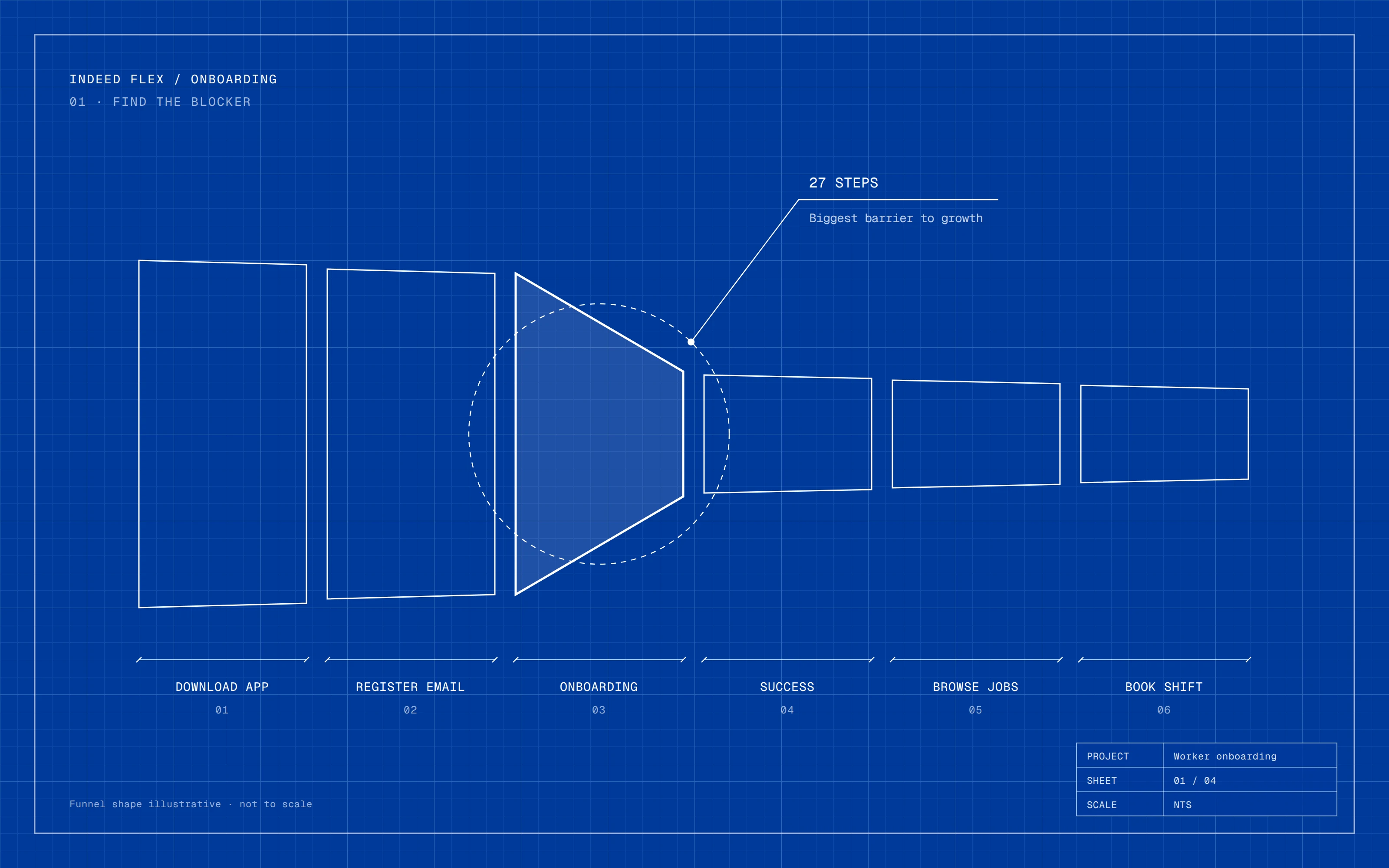
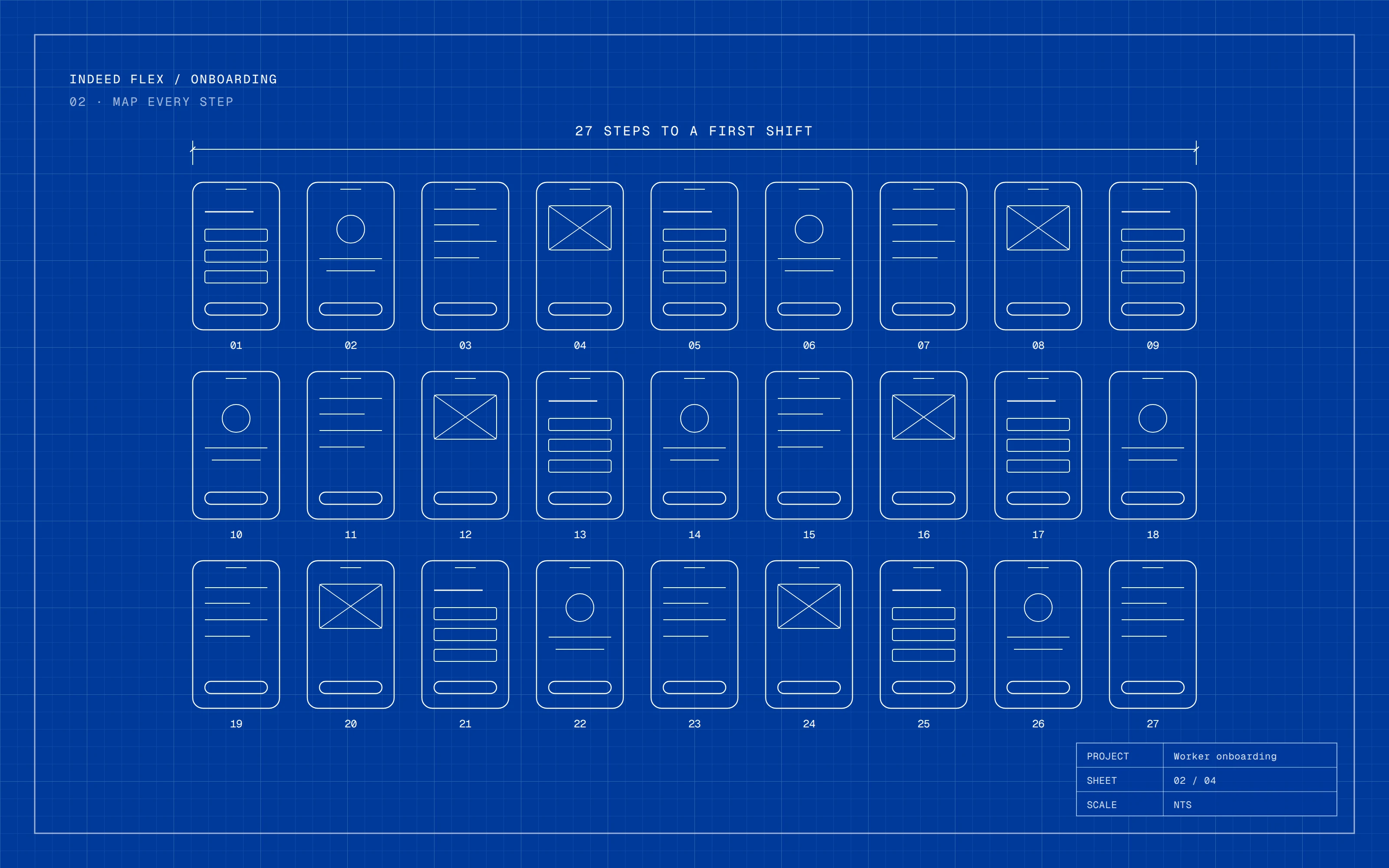
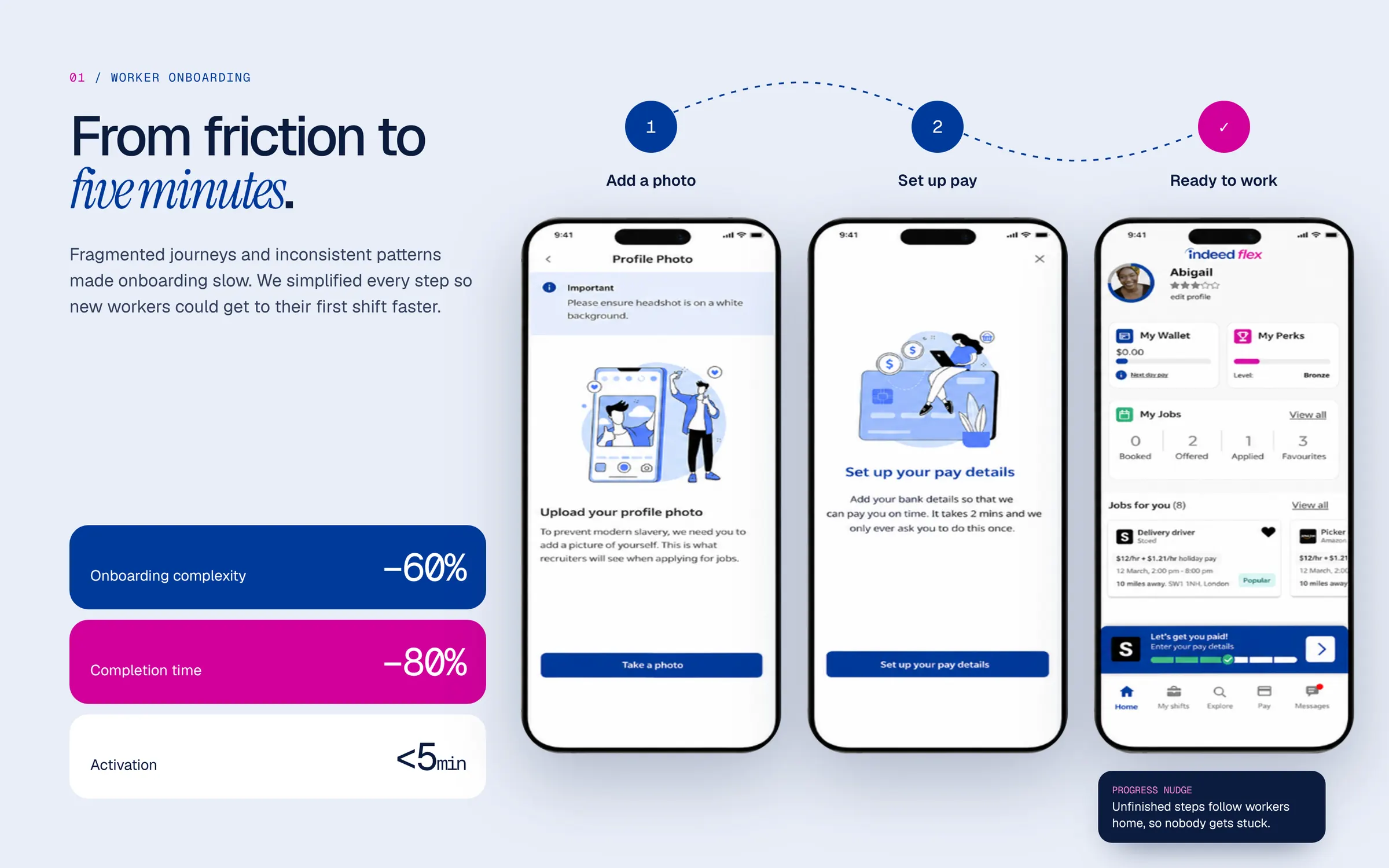
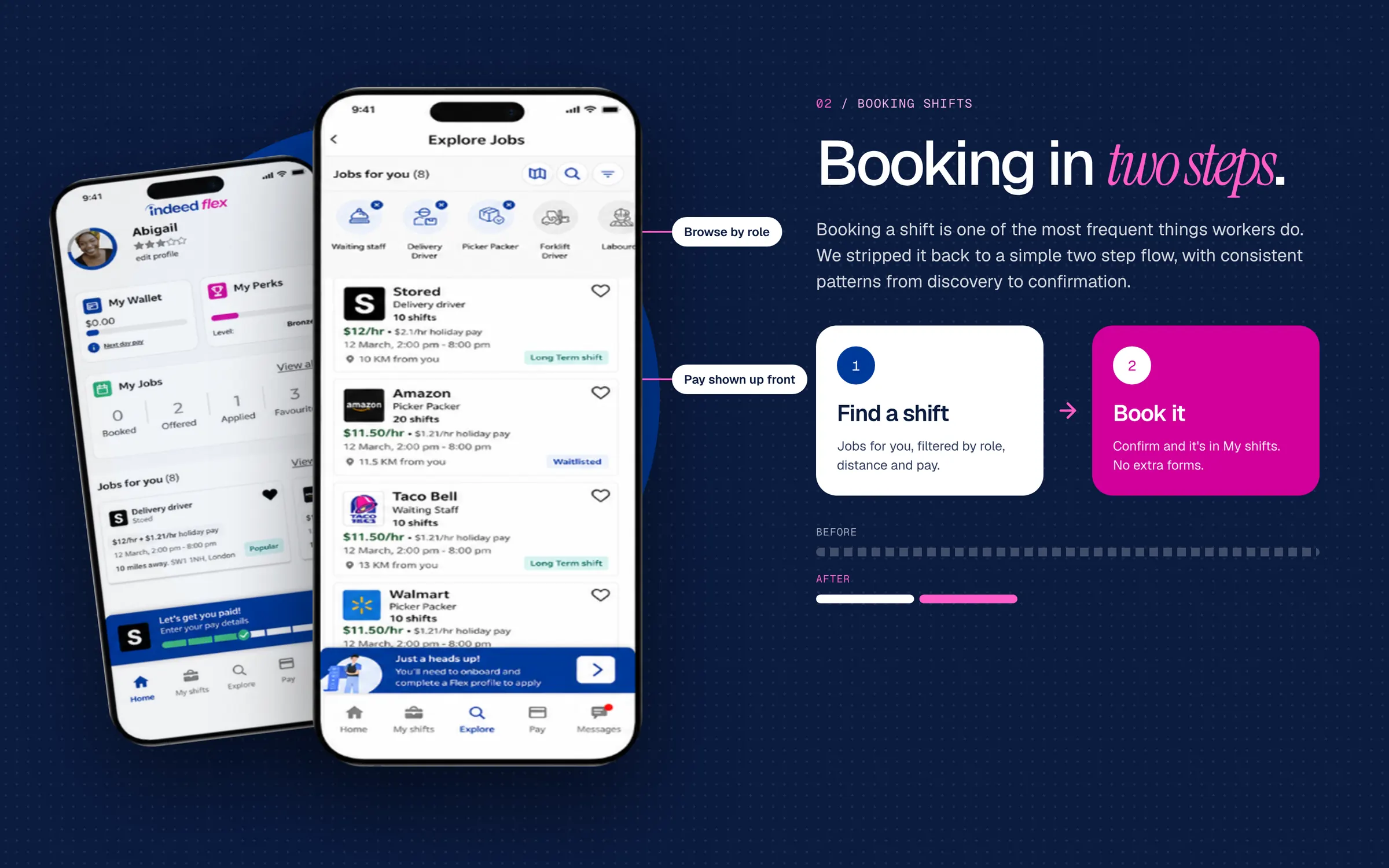
For workers, fragmented journeys and inconsistent patterns created friction across key activities such as onboarding, finding work, and booking shifts.
For clients, workforce planning, fulfilment, and operational management became increasingly difficult to scale efficiently.
At an organisational level, design faced a different challenge. The function was largely focused on delivery, with limited visibility into strategic planning and product direction. Processes varied between teams, collaboration was inconsistent, and the design system had become fragmented and difficult to scale.
The challenge wasn't simply improving individual user experiences.
It was creating a more scalable product ecosystem while evolving design into a strategic capability that could influence business outcomes, shape product direction, and support the organisation's continued growth.
My role
As User Experience Director, I led both the strategic and operational evolution of design across the organisation.
My responsibilities included:
- — Defining design strategy across worker and client platforms
- — Leading, mentoring, and scaling the design team
- — Partnering with executive leadership, including CEO and VP stakeholders
- — Contributing to planning and product direction as part of the R&D leadership group
- — Driving adoption of AI-powered design workflows
- — Strengthening collaboration between design, product, and engineering
- — Leading the evolution of the design system to improve consistency and scalability
- — Influencing how opportunities, priorities, and product investments were evaluated
A significant part of my role involved increasing the influence of design within the organisation, ensuring design was involved earlier in planning, discovery, and strategic discussions rather than operating solely as a delivery function.
Vision
The vision was to evolve design from a service function into a strategic partner capable of shaping business outcomes, influencing product direction, and scaling alongside the organisation.
Achieving this required progress across three connected areas.
Product experience Creating a more consistent and intuitive experience across worker and client journeys while reducing friction across critical workflows. | Design operations Building stronger processes, greater visibility, and improved alignment across teams to enable more effective collaboration and delivery. |
Design leadership Embedding design more deeply within product strategy, planning, and organisational decision-making while increasing its influence across the business. |
Rather than focusing solely on product outputs, the goal was to create the systems, practices, and culture required to deliver better outcomes at scale.
Key transformations
Creating a more unified product experience A major focus was reducing friction across high-frequency journeys such as onboarding, shift discovery, and booking — simplifying experiences, improving consistency, and creating a more cohesive end-to-end journey across the worker platform. | Evolving the design system I led efforts to simplify and consolidate fragmented patterns, creating a more scalable foundation that improved consistency, accelerated delivery, and reduced ambiguity across teams. |
Building stronger organisational alignment I introduced weekly design show-and-tell sessions across the organisation, creating greater transparency, strengthening relationships across disciplines, and establishing a shared understanding of priorities and direction. | Modernising design through AI I led the adoption of AI-powered workflows across the R&D organisation, enabling faster exploration, more rapid iteration, and broader concept generation while helping teams scale their effectiveness. |
Establishing design as a strategic partner As part of the R&D leadership team, I contributed directly to planning, business discussions, and product strategy — positioning design as an active contributor to organisational decision-making. |
Outcome
Over time, the role of design within the organisation evolved significantly.
What began as a largely delivery-focused function became a visible and influential contributor to product strategy, planning, and business decision-making.
Alongside continuous improvements across the worker and client platforms, the design organisation became stronger, more cohesive, and better equipped to scale with the business.
New ways of working improved collaboration, increased visibility across teams, accelerated exploration, and enabled design to play a more central role in shaping both product direction and organisational thinking.
Impact
User impact
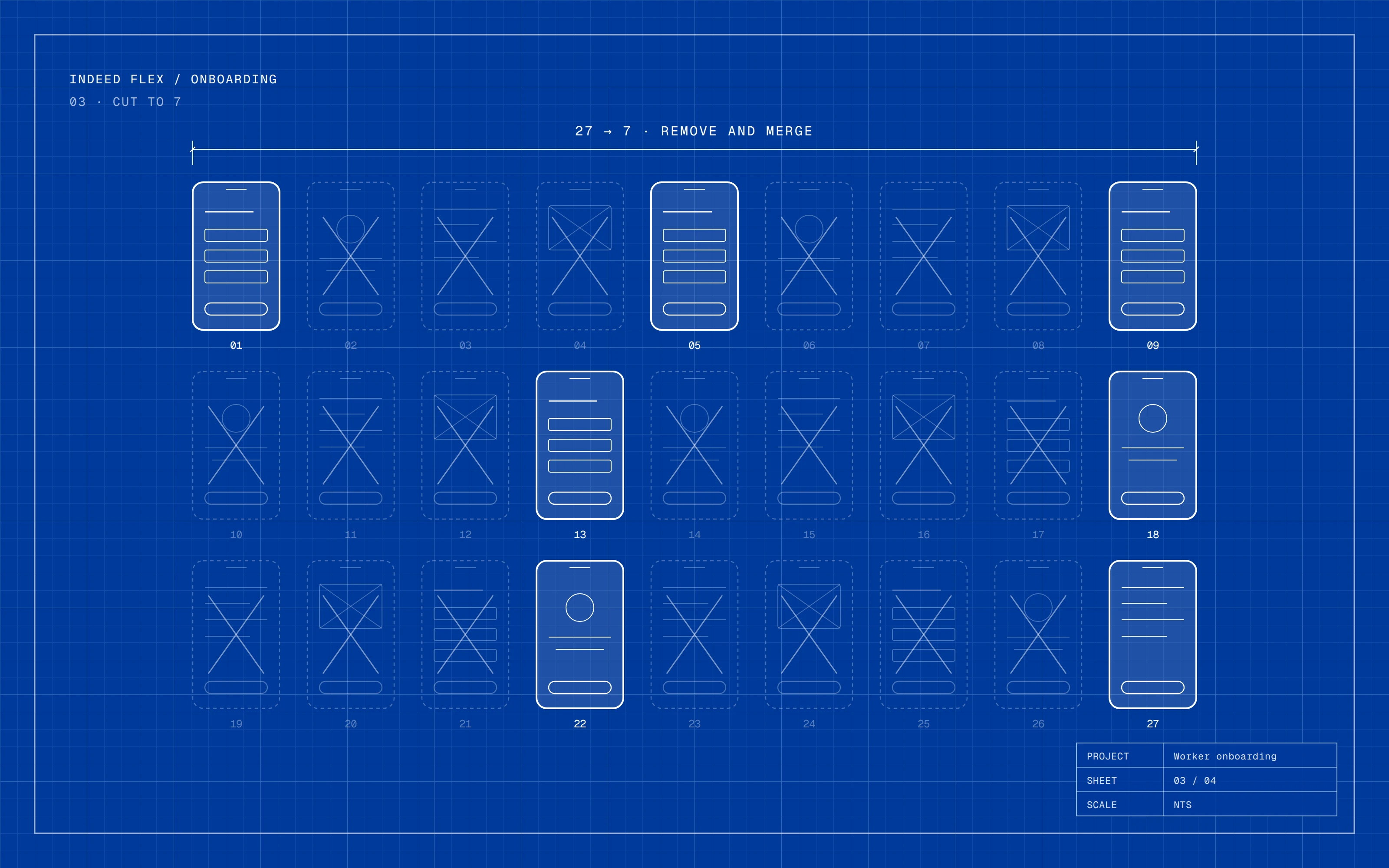
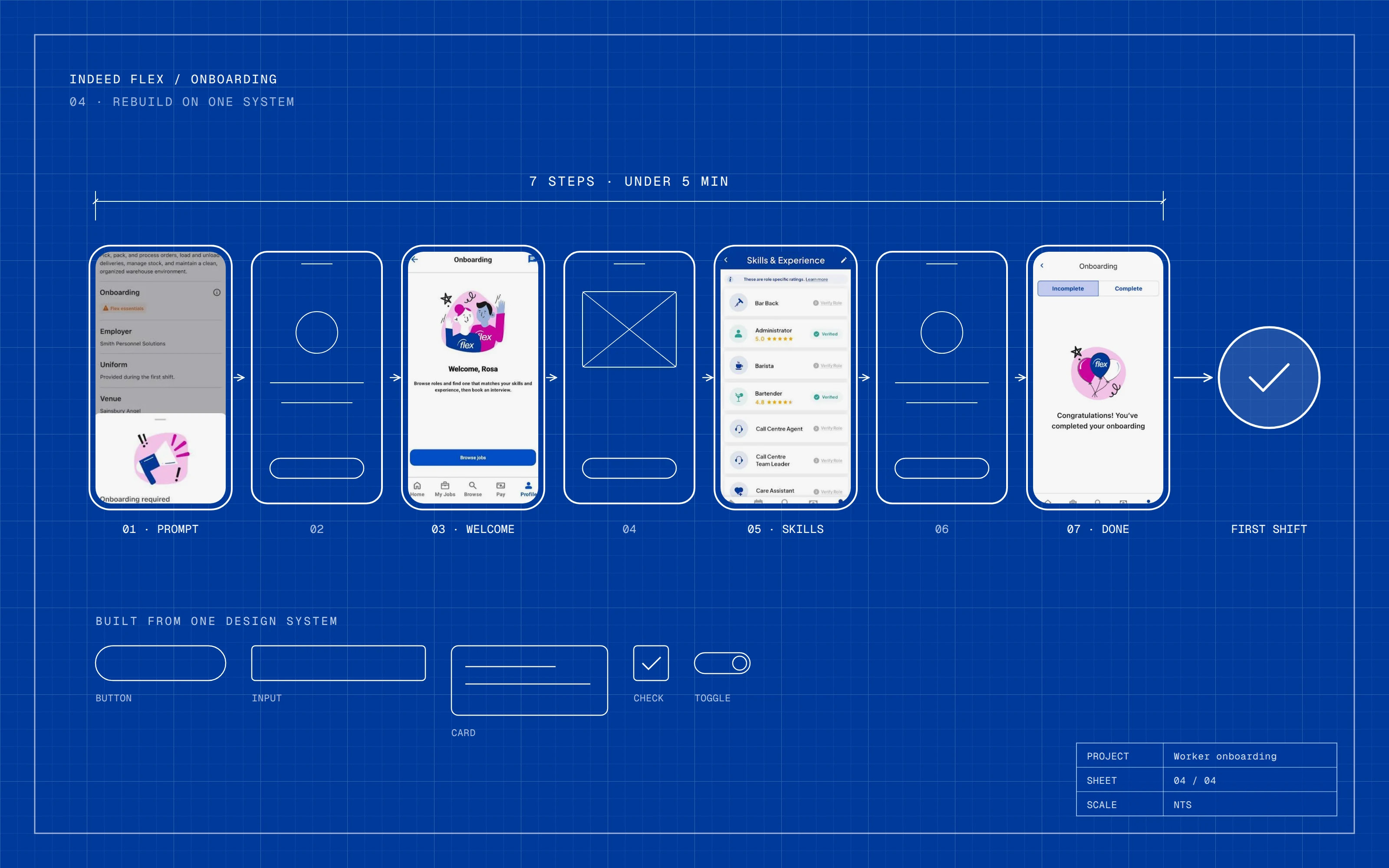
- — Reduced onboarding complexity by more than 60%
- — Reduced onboarding completion time by over 80%
- — Enabled workers to complete activation in under five minutes
- — Introduced a simplified two-step booking flow for one of the platform's highest-frequency actions
Business impact
- — Contributed to a 23% improvement in client retention through continuous platform improvements
- — Improved operational efficiency across staffing, fulfilment, and compliance workflows
- — Supported a workforce ecosystem serving more than 2,000 employers and 240,000+ verified workers across the UK and US
- — Helped improve unit economics through more efficient operational processes and reduced operational overhead
Design leadership impact
- — Scaled and restructured the design organisation by approximately 70%
- — Introduced AI-powered design workflows across the R&D organisation
- — Established weekly cross-functional design reviews to improve visibility and alignment
- — Increased executive engagement with design across planning and roadmap discussions
- — Strengthened collaboration between design, product, and engineering leadership
- — Helped establish design as a strategic partner within product and business decision-making
Reflection
This experience reinforced that scaling design is about far more than improving products.
While measurable improvements across onboarding, booking, and retention demonstrated the value of better user experiences, the most significant impact came from strengthening the foundations that enable great products to be built consistently.
By growing the team, improving collaboration, modernising design practices, and increasing design's influence across the organisation, we created an environment where better decisions could happen more frequently and with greater business impact.
The result was not only a stronger product experience, but a stronger design organisation capable of driving long-term strategic value.
Interested in similar outcomes?
Let's talk about how design leadership can help your team.